|
von
Thomas Nötting, veröffentlicht im Magazin "Cinechart" der
ProSiebenSAT1-Media AG, Dezember 2001
Die Zwillingsbrüder
Arne und Hilmar Kaul aus Kamen sind die heimlichen Chronisten der deutschen
Synchronszene. Ihre Datenbank gilt als die beste ihrer Art. Eine Geschichte
über das Sehen und das Zuhören.
Immer, wenn
er Sandra Bullock im Fernsehen sieht, denkt Arne an Bettina. An Bettinas sympathisch-sanfte
Stimme. Nicht vielen Männern wird beim Anblick der Hollywoodschönheit
eine andere Frau in den Sinn kommen. Arne Kaul schon. Jeder andere würde
irgendeine Stimme wahrnehmen. Kaul dagegen weiß genau, dass Sandra Bullock
mit der deutschen Stimme von Bettina Weiß spricht. Kaul könnte sämtliche
13 Filme nennen, in denen die Berliner Schauspielerin ihrer berühmten US-Kollegin
die Stimme lieh. Und die zwei Filme, in denen der Hollywoodstar von einer anderen
synchronisiert wurde. Dazu müsste er nicht einmal in seiner Datenbank nachsehen.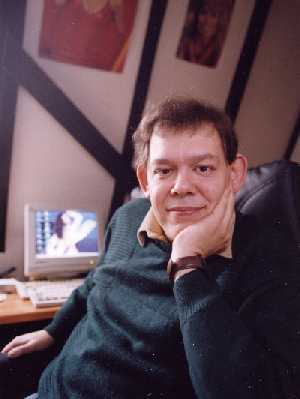
Niemand weiß
mehr über deutsche Synchronsprecher als Arne Kaul. In einem kleinen Dachzimmer
im westfälischen Kamen betreibt der 36-jährige seit über 15 Jahren
den großen Lauschangriff auf Hollywood. "Wenn man so will, ist das
mein Büro", murmelt er verlegen beim Aufstieg über die enge Treppe.
Kaul bekommt nicht oft Besuch. Meistens sitzt er hier allein vor einem der vier
Bildschirme. Vor dem alten Fernseher, der längst nur noch als Monitor für
den Videorekorder benutzt wird, oder an einem der Rechner. Früher war diese
Kammer im elterlichen Einfamilienhaus sein Kinderzimmer. Jetzt befindet sich
hier die Zentrale der Firma ArKa-Soft. Aber Äußerlichkeiten sind
dem 36-jährigen nicht wichtig. Wichtig ist allein das, was sich hinter
den Bildschirmen und Kabeln verbirgt: Tausende von Namen, Daten, Filmtiteln,
Jahreszahlen. Kaul kennt sie alle. Sie sind hier auf dem grauen Rechner gespeichert.
Aber genauso in seinem Kopf.
Der Name
Kaul steht für Zuverlässigkeit
"Genau
4.865 Sprecher sind es mittlerweile", sagt der blasse Mann und blickt mit
einem Anflug von Stolz auf den Bildschirm mit der Aufschrift "Multimedia
Spielfilm- und Serien-Bibliothek für Sprecherbesetzungen". Diese Zahl
steht für die umfangreichste, aber auch ungewöhnlichste Datenbank
deutscher Synchronstimmen, die wahrscheinlich jemals erstellt wurde. In der
Synchronbranche spricht man einfach von der "Kaul-Datenbank", denn
der Name Kaul steht für Zuverlässigkeit. Aber hinter dieser Zahl verbirgt
sich auch eine Geschichte, die mindestens so ungewöhnlich ist wie "Filmlib",
die "Kaul-Datenbank", selbst. Es ist die Geschichte von Arne Kaul
und auch von seinem Zwillingsbruder Hilmar.
Arne und Hilmar
Kaul würden dagegen protestieren, als ungewöhnlich bezeichnet zu werden.
Denn eigentlich geben sie sich alle Mühe, möglichst normal und unauffällig
zu wirken. Der Glamour Hollywoods ist weit weg, hier in Kamen-Heeren, in der
früheren Zechensiedlung, wo unter den gepflegten Vorgärten mit gerade
geschnittenen Hecken und bunten Gartenzwergen noch Dieselzüge in unterirdischen
Stollen die Kohle zum nächsten Schacht transportieren. Aber Arne Kaul besitzt
eine unglaubliche Fähigkeit. Er kann 3.000 Synchronsprecher an ihrer Stimme
erkennen. "Das ist eigentlich nichts Besonderes", wiegelt er ab. "Es
ist einfach Übung. Bei entsprechendem Training könnte das im Prinzip
jeder lernen." Nur - wer außer ihm hätte sich über 15 Jahre
lang mit Haut und Haaren und mit diesem Ernst diesem Thema verschrieben? Die
Sprecherbibliothek ist für ihn mehr als Beruf, sogar mehr als Berufung.
Sie ist eine Lebensaufgabe.
Tausende
von Namen, Daten, Filmtiteln, Jahreszahlen. Arne Kaul kennt sie alle. Sie sind
auf dem Rechner gespeichert. Aber genauso in seinem Kopf.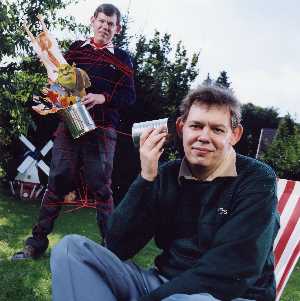
Die Geschichte
beginnt 1972, vor fast 30 Jahren. Arne und Hilmar waren siebenjährige Jungs
und verpassten Samstag abens keine Folge von "Raumschiff Enterprise".
"Und irgendwann hörte ich diese Stimme in einem anderen Film wieder",
erinnert sich Arne, "die Stimme von Captain Kirk." Wie er bald herausfand,
war es in Wirklichkeit die Stimme der Synchronlegende Gert-Günther Hoffmann.
Seitdem hörte Arne genau hin beim Fernsehen und sammelte jede Information,
die er über die Stimmen aus dem Off bekommen konnte. Schnitt Informationen
aus Programmzeitschriften aus und sammelte sie. Wenn die Schulkameraden später
für die Stars aus "Dallas" und "Denver Clan" schwärmten,
wusste Arne schon genau, wem die deutschen Stimmen von J.R. [Wolfgang Pampel],
Bobby [Hans-Jürgen Dittberner], Alexis [Ursula Heyer] und Krystle [Gisela
Fritsch] gehörten. Alles fein säuberlich notiert in unzähligen
Schulheften. "Es hat als Hobby angefangen." Mit Anfang 20 - Arne machte
mittlerweile eine Ausbildung zum Industriekaufmann - "kam mir die Idee,
mich bei 'Wetten dass...' zu bewerben."
Wahrscheinlich
wären Arne Kaul und sein hochtrainiertes Gehör schon damals locker
Wettkönig geworden. Doch er wollte ganz sichergehen, schrieb Synchronstudios
an und fuhr nach Berlin, um die Firmen dort persönlich um Informationen
zu bitten. Man kann nur mutmaßen, wie exotisch der Junge aus der Nähe
von Dortmund auf die Filmleute gewirkt haben muss. "Aber dann haben die
gemerkt, was ich schon alles wusste." Seitdem sammelte Arne Kaul systematisch.
Irgendwann sagte ihm jemand: "Mach das doch kommerziell, das ist eine Marktlücke."
Denn Informationen über Sprecher waren kaum zu bekommen. Bis auf wenige
Stars mit festem Sprecher verpasste jedes Studio und jeder Verleiher den Hollywoodmimen
eine andere deutsche Stimme. Arne Kaul wurde zwar bei "Wetten dass..."
nicht genommen, gründete aber später als BWL-Student ArKa-Soft. Zwillingsbruder
Hilmar, der Informatiker, schrieb das Programm für "Filmlib".
In Arnes
Zimmer unter dem Dach hängen noch die Helden seiner Jugend. Manche der
Starposter von Heather Locklear, Kirk und Spock sind schon ein wenig vergilbt.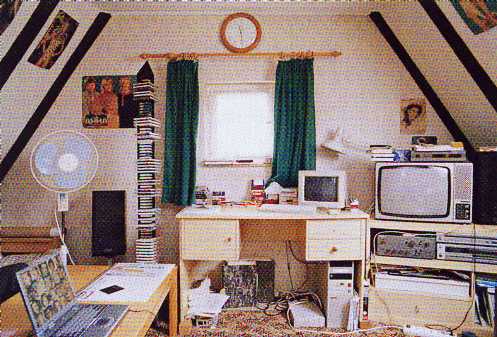
Seitdem hat
sich viel getan, aber vieles ist auch unverändert geblieben im Leben der
Brüder Kaul. Zahlreiche Synchronfirmen und einige Fernsehsender zählen
inzwischen zu Kauls Kunden. Mit Hilfe der Datenbank stellen sie Besetzungslisten
zusammen. Arne lebt noch immer im Haus der Eltern, Hilmar ein paar Straßen
weiter im Haus der Großmutter. In Arnes Zimmer unter dem Dach hängen
nach wie vor die Helden seiner und Hilmars Jugend. Manche der Starposter von
Heather Locklear, Kirk und Spock und von Sylvester Stallone sind schon ein wenig
vergilbt. "Die hängen seit 20 Jahren da", sagt Arne. Er hat keine
Notwendigkeit gesehen, sie zu entfernen, genauso wie die hell furnierten Jugendzimmermöbel,
die hier immer noch ihren Dienst tun.
Jeder Film
wird einem Hörtest unterzogen
Ihre 36 Jahre
sieht man den Zwillingen nicht an. "Wir werden oft für jünger
gehalten", sagt Hilmar. Mit ihren Bundfaltenhosen, den ordentlich gescheitelten
Frisuren und glatten Gesichtern wirken sie tatsächlich ein wenig wie zu
groß geratene Jungen. Alles in doppelter Ausführung, denn Arne und
Hilmar Kaul zählen zu der Sorte von Zwillingen, die sich in lebenslanger
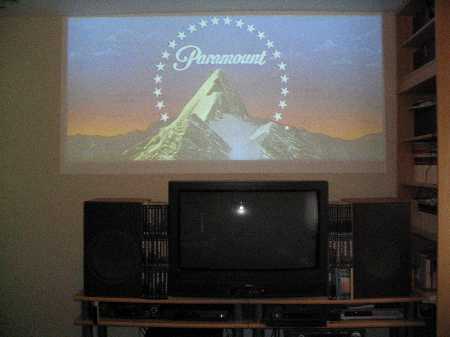
Symbiose optisch immer mehr angenähert haben. In ihrem "Fernsehraum"
stehen ein moderner Beamer und eine Hochleistungsstereoanlage, die das perfekte
Kinoerlebnis an die eigens dafür verputzte Wand projizieren. Hier werden
Hilmar und Arne wieder ein wenig zu den Jungs, die mit leuchtenden Augen die
neueste "Star Trek"-Folge verschlingen.
Überhaupt
wirkt die Zeit in der Welt der Kaul-Brüder seltsam konserviert. Arne bewahrt
die deutsche Synchrongeschichte für die Nachwelt auf, Hilmar, der im Hauptberuf
als EDV-Mann für eine evangelische Behindertenbetreuunugseinrichtung arbeitet,
die Computergeschichte. Als Eingabeterminal für "Filmlib" dient
nimmer noch ein über 15 Jahre alter Apple IIgs. "Der ist immer noch
unübertroffen als Eingabemaske. Viel einfacher zu handhaben", erklärt
Hilmar. Auch sonst wird kaum etwas weggeworfen. Nicht die über 20 Jahre
alte Festplatte, ein Sammlerstück aus der Steinzeit der Computerära
["So groß und nur fünf Megabyte! Eine Rarität!"] und
schon gar nicht die zahlreichen "Star Trek"-Modellraumschiffe aus
Jugendtagen, die hier in Arnes Bürozimmer stehen.
Zweimal im
Jahr besteigen Arne und Hilmar das weiße Wohnmobil der Familie Kaul. Vom
Kamener Kreuz geht es ostwärts, Richtung Berlin, wo die meisten Synchronfirmen
ihren Sitz haben. "Wir sparen uns das Hotel", sagt Arne. "Denn
Reichtümer kann man mit der Datenbank noch nicht verdienen." Mit dem
Kaul-Mobil könnten auch nur die wenigsten Hotelzimmer mithalten. Eine hochmoderne
Satellitenanlage ermöglicht den Empfang sämtlicher Fernsehsender.
"Man muss ja auch im Urlaub gucken können", meint Arne. Im Gepäck
haben sie die neue Version von "Filmlib". Hilmar installiert die
Software und speichert die Datensätze der Synchronstudios. Arne hilft ihm
und kümmert sich ums Geschäft.
Zweimal
im Jahr besteigen Arne und Hilmar das weiße Wohnmobil der Familie Kaul.
Vom Kamener Kreuz geht es ostwärts, Richtung Berlin.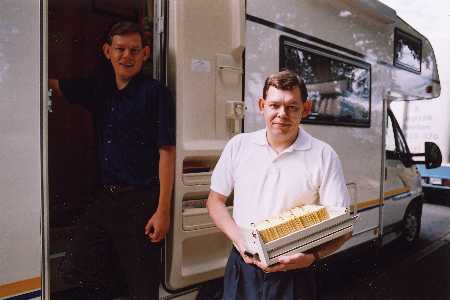
Die Besetzungslisten
der Studios sind die Grundlage der Kaulschen Filmbibliothek. Aber Arne Kaul
übernimmt nichts ungeprüft. In jeden Film hört er nochmal rein,
jede Stimme wird vorm Bildschirm einem Hörtest unterzogen. "Es passiert
sehr häufig, dass die Studios im letzten Moment irgendwelche Nebenrollen
umbesetzen." Und auch diese Stimmen müssen stimmen. Das ist er der
Marke Kaul schuldig. Für die vielen anderen Synchronsprecher-Nachschlagewerke,
die im Internet und anderswo kursieren, hat er nur sein schüchternes, jungenhaftes
Lächeln übrig. Sie mit "Filmlib" zu vergleichen hieße,
ein paar billige Rechenschieber mit einem Hochleistungscomputer auf eine Stufe
zu stellen. Das würde der zurückhaltende Mann zwar so nie sagen. Aber
er weiß genau: Wer wirklich wissen will, wer wann wen wo synchronisiert
hat, der muss bei Kaul nachschauen.
Anruf von
"Alf"
Dafür
sitzt er pro Woche 50 Stunden vor dem Bildschirm, schätzt Arne Kaul. Hört,
notiert und gibt die Daten in den alten Apple IIgs ein. In der kleinen Synchronszene
in Berlin und München kennt und schätzt man die Brüder. Sie passen
vielleicht auf den ersten Blick nicht zum schillernden Synchronvölkchen,
gehören aber inzwischen dazu. Hilmar freut sich auf die Fahrten nach Berlin
und München. Dafür opfert er gern ein paar Wochen Urlaub. "Für
mich ist das ja mehr ein Hobby, die Datenbank ist Arnes Projekt." Manche
Synchronsprecher wie Irina Wanka - die deutsche Stimme von Sophie Marceau -
haben sich schon mit den Brüdern zum Kaffee verabredet. Synchronsprecher
ist immer noch ein Beruf mit wenig Prestige. "Manche freuen sich einfach,
dass jemand ihre Arbeit so würdigt", sagt Arne. Kürzlich hat
auch Tommi Piper ["Alf"] angerufen und sich sehr für die legendäre
Kaul-Datenbank interessiert. "Der hatte durch einen Aufnahmeleiter von
uns erfahren."
Einmal, da
hat man Arne und Hilmar Kaul angeboten, selbst vor ein Mikrofon zu treten. Bei
der Synchronisation einer "Star Trek"-Folge hätten die beiden
Brüder, die jedes Detail in sämtlichen Staffeln der Weltraumsaga kennen
dürften, winzige Nebenrollen sprechen können. In Arnes Augen ist noch
ein Abglanz des Schreckens zu erahnen, der ihm in diesem Moment in die Glieder
gefahren sein muss. "Nein, das machen wir nicht, haben wir gesagt. Wir
sind keine Schauspieler." Im Rampenlicht sollen andere stehen. Arne Kaul
hat seine Rolle gefunden. Er hört lieber zu.
Redaktionell
bearbeitet 01/2004 Gereon Stein
|
|
|
|